4765 Carmel Mountain Rd., Suite 203, San Diego, CA 92130


How To Manage Sensitive Teeth After Whitening: Dr. Sarah Elghor Explains

Teeth whitening is the one cosmetic treatment for brighter smiles that most patients agree does the trick. However, this often comes with the compromise of having sensitive teeth. If you are also feeling this way after teeth whitening treatment, you are not alone. This side effect is a common yet uncomfortable occurrence, and in most cases, the teeth fully recover with a few simple tricks.
If you are looking into teeth whitening in San Diego, you may already be aware of the dramatic difference it can make to your smile. Though teeth whitening offers rapid, instant results, sensitivity is a common issue for patients undergoing whitening treatment. Whether it comes in the form of pain after eating either a hot or cold item, or merely an overall sensitivity, your teeth require some time to adapt after treatment. In this blog, Dr. Sarah Elghor offers useful tips to cope with the sensitivity of your white smile.
What Causes Teeth Sensitivity After Whitening Treatment?
To address sensitivity in your teeth after whitening treatments, it is crucial to first understand why it is occurring. In most cases of teeth whitening, sensitivity results from the whitening agent penetrating the enamel and into the dentine, where it irritates the nerve endings inside your tooth. This is completely normal, and you should ensure that teeth whitening treatments are performed correctly to minimize this irritation.
Although cosmetic purposes are the primary motive behind teeth whitening in San Diego, there are certain other benefits. A whiter smile brings benefits, including improved oral hygiene habits and self-confidence, which may lead to more frequent dental appointments and, therefore, better overall oral health.
How to Manage Sensitive Teeth After Whitening
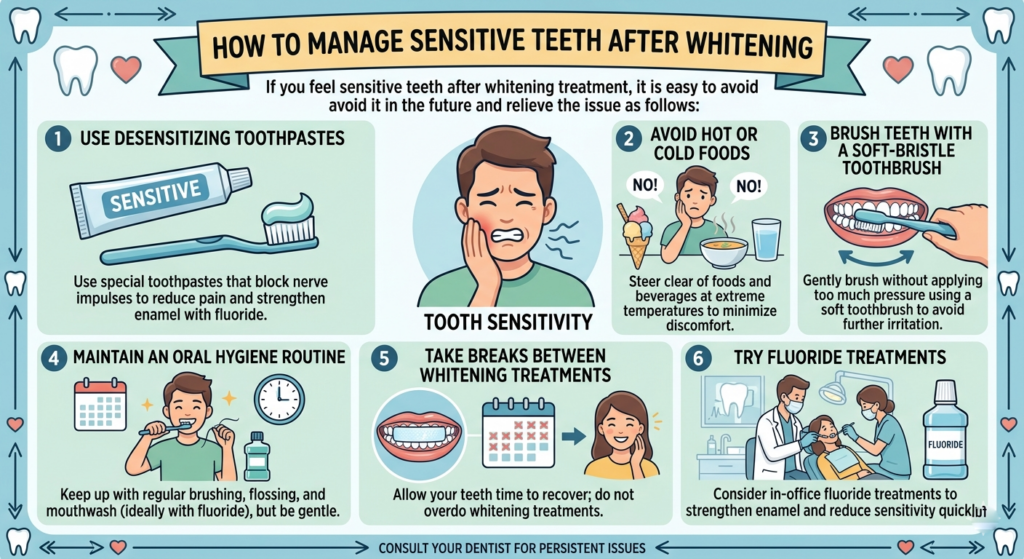
If you feel sensitive teeth after whitening treatment, it is easy to avoid it in the future and relieve the issue as follows:
- Use Desensitizing Toothpastes: Toothpastes for tooth sensitivity use specific ingredients to block the transmission of nerve impulses, reducing pain, and, with the added benefit of high fluoride levels, can also help strengthen tooth enamel.
- Avoid Hot or Cold Foods: If you have sensitive teeth, make a conscious effort to avoid hot or cold foods and beverages, as well as foods that can irritate them. A warm cup of tea instead of an iced coffee will minimize tooth pain.
- Brush Teeth With A Soft-Bristle Toothbrush: Use a soft toothbrush with soft bristles that won’t exacerbate sensitivity, and avoid applying too much pressure to teeth that are already hurting.
- Maintain an Oral Hygiene Routine: Keep up with brushing, flossing, and mouthwash use (ideally with fluoride). However, try not to be too rough when brushing to avoid hurting your teeth.
- Take Breaks Between Whitening Treatments: Avoid overdoing whitening, as overexposing your teeth to the whitening agent can increase sensitivity. You may want to let your teeth rest between treatments.
- Try Fluoride Treatments: An in-office fluoride treatment will strengthen tooth enamel and, therefore, reduce tooth sensitivity as soon as possible.
Normally, post-whitening teeth sensitivity lasts only 1-3 days, but if it continues beyond that period, you will need to revisit the cosmetic dentist who performed the whitening treatment. You might be wondering, “How much does professional teeth whitening cost?” Always remember that the effectiveness depends on the whitening method and its location. The easiest way to find out is to see a cosmetic dentist for your individual quote.
When to Seek Professional Help for Sensitivity
While mild sensitivity is normal after a teeth-whitening treatment and usually resolves within a few days, professional intervention is sometimes required. If you have prolonged or severe discomfort, it is best to discuss it with a dentist. When to call your cosmetic dentist:
1. Sensitivity Lasts Longer Than Expected
Sensitivity that persists for more than 3 days may indicate a problem. Your dentist will examine you to determine whether you are having an adverse reaction or if your treatment plan should be modified.
2. Pain Is Intense or Unbearable
If the discomfort is extreme to the extent that you are unable to consume food and beverages, it is likely that you need to see a professional dentist for dental care. Overexposure to bleaching agents or enamel deficiency may cause this problem.
3. Visible Signs of Damage or Irritation
Gums that are red, inflamed, swollen, or have other visible signs of damage should prompt a visit to a dentist. This is a sign that the teeth whitening process requires a check.
4. Unusual Sensitivity Beyond Whitening
If your teeth feel sensitive long after whitening treatments, it is an indicator that there may be a different dental issue. Your dentist will tailor the best teeth-whitening treatment to your specific needs to avoid such issues.
By seeking help from a professional early on, you are guaranteed safe, effective teeth-whitening results that will help maintain a beautiful, white smile.
Long-Term Tips For Maintaining Teeth Sensitivity
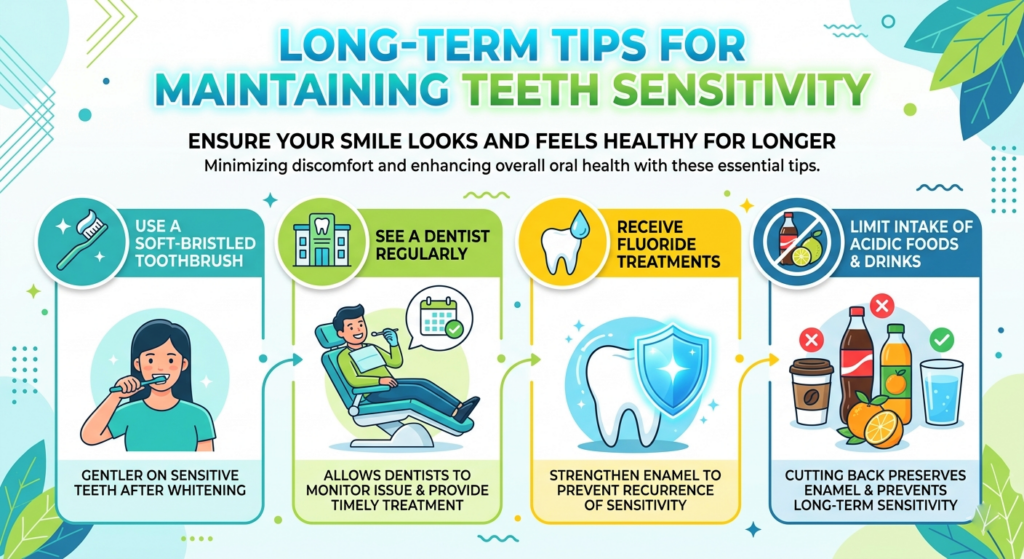
Teeth whitening is not just about minimizing discomfort after the procedure; it also helps ensure your smile looks and feels healthy for longer. Below are long-term tips to minimize sensitivity and enhance overall oral health.
- Use a soft-bristled toothbrush: After teeth whitening, switch to a soft-bristled toothbrush to be gentler on your sensitive teeth.
- See a dentist regularly: Regular visits will allow your dentist to monitor the issue and provide timely treatment if it persists.
- Receive fluoride treatments: Enamel can be strengthened to prevent the recurrence of sensitivity using fluoride treatments provided by your dentist.
- Limit intake of acidic foods and drinks: Cutting back on acidic foods and drinks, such as coffee, soda, and orange juice, will not only preserve enamel but also prevent long-term post-treatment sensitivity.
One question many have is, “How to whiten teeth without damaging enamel?” Opting for a cosmetic dentist to perform the whitening procedure ensures the best results. Professional cosmetic dentists will carry out all whitening treatments, knowing how to protect the enamel, how to use the right concentration of whitening agents, and the appropriate procedure to ensure the maximum positive impact on your teeth with minimal risk to the enamel.
Maintaining A Beautiful And Healthy Smile
The teeth whitening process does not necessarily mean you have to suffer with sensitive teeth for too long. By following some helpful advice, including using sensitive-tooth toothpaste and avoiding extreme temperature changes, your new smile can also be a pain-free journey. The best way to ensure your teeth-whitening treatment proceeds smoothly and effectively is to receive treatment from a professional cosmetic dentist in San Diego.
Are you ready to obtain a sparkling smile without facing discomfort? Call us today for an appointment at Elghor Dental Studio. Our team is ready to discuss the ways we can help you achieve the smile of your dreams, easily and painlessly.
How long does sensitivity last after teeth whitening?
Sensitivity typically lasts 1-3 days after whitening. However, if discomfort persists beyond this period, it’s best to consult your dentist to rule out any underlying issues and ensure your whitening process was performed correctly.
Can I whiten my teeth if I have sensitive teeth?
Yes, you can still whiten your teeth if they’re sensitive. However, it’s important to use the teeth-whitening procedure recommended by your dentist. They can tailor the treatment to minimize discomfort and protect your enamel.
What can I do if my teeth hurt after whitening?
If your teeth hurt after whitening, try using desensitizing toothpaste, avoiding extreme temperatures, and brushing gently with a soft-bristled toothbrush. If pain persists, schedule a visit with your dentist for professional advice and solutions.
Is it safe to whiten sensitive teeth?
Whitening sensitive teeth is generally safe when performed under professional guidance. Your dentist can recommend the best teeth-whitening procedure to minimize discomfort and protect your enamel throughout the process.
How can I prevent sensitivity after future whitening treatments?
To prevent sensitivity after whitening, ensure you follow proper aftercare instructions, such as using fluoride toothpaste, avoiding hot or cold foods, and scheduling breaks between treatments. Consult your dentist for personalized advice to maintain comfort.
Can desensitizing toothpaste help after whitening?
Yes, desensitizing toothpaste can help manage sensitivity after whitening. It contains ingredients that block nerve transmission and soothe discomfort. Regular use can also strengthen enamel, making it a great option for long-term relief from sensitivity.
